The Mbaru Niang houses
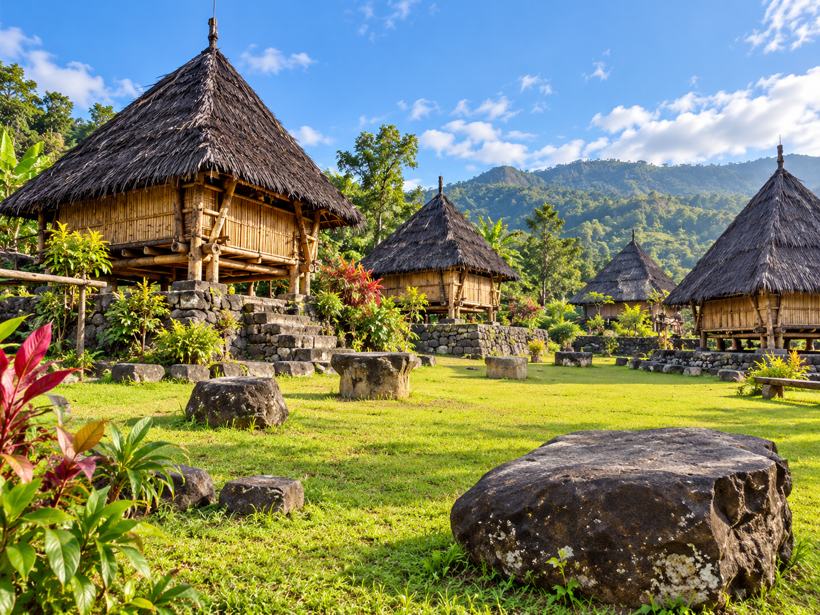
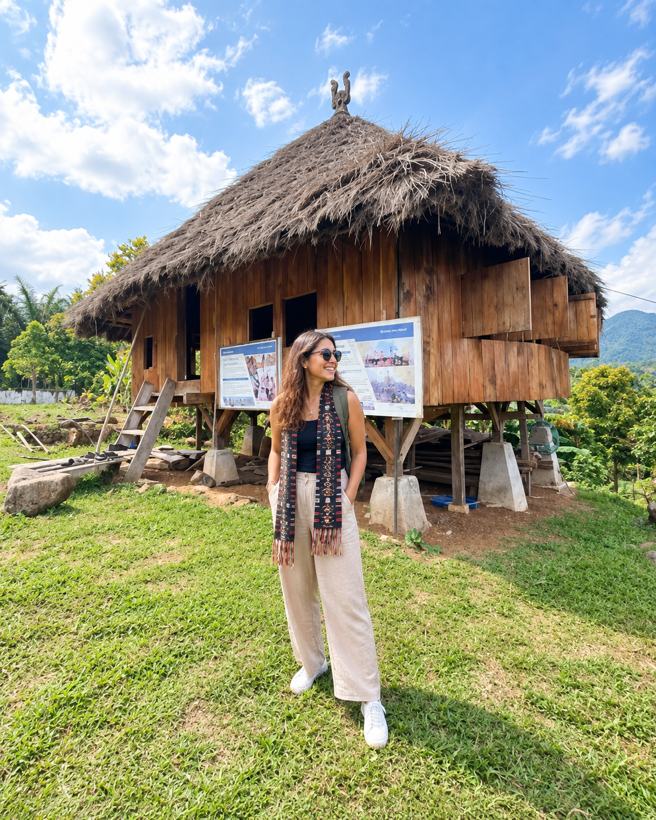
The village is made up of seven Mbaru Niang, tall conical houses with thatched roofs that sweep almost to the ground. Each has five levels inside: the family living floor, storage for food, seed grain, reserves for hard times and, at the top, offerings to the ancestors. The houses stand in a circle around a stone altar called the compang, the ritual centre of the village.
The main house, Niang Gendang, holds the village drum and gong and is where guests are welcomed. The Manggarai people of Wae Rebo have rebuilt the houses by hand from local timber, bamboo and palm fibre, and the village received a UNESCO Asia-Pacific heritage award for the restoration. Mist rolls in and out of the valley through the day, and the setting is remarkably quiet.
The drive from Labuan Bajo
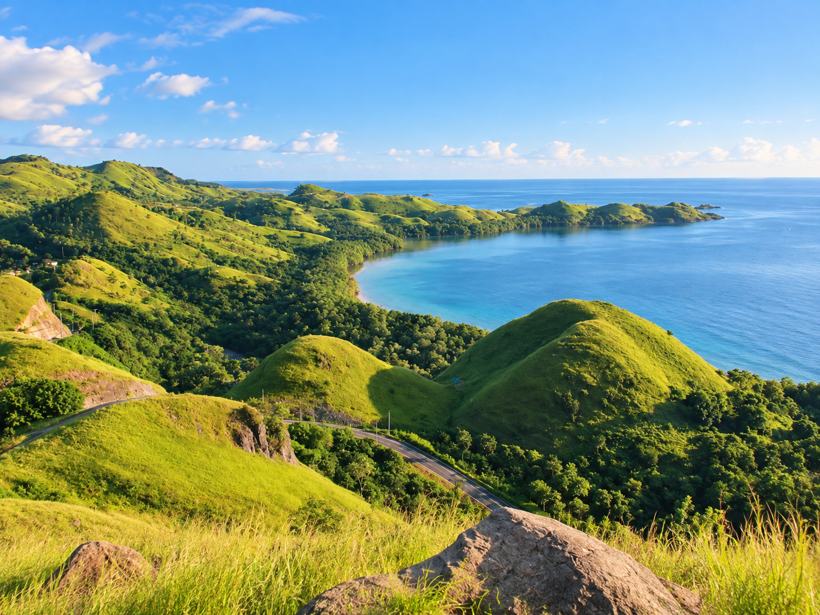
Wae Rebo is reached from Denge, the last village on the road, which lies roughly five to six hours' drive southeast of Labuan Bajo. The route climbs through the Flores highlands past rice terraces, coffee gardens and forest, with a stop at the spider-web rice fields at Cancar if you take the inland road. The final stretch winds along the south coast before turning up into the hills.
The road is sealed but narrow and twisting, so the day is spent mostly in the car with regular breaks for views and meals. Most trips leave Labuan Bajo early and reach Denge in the afternoon, either to begin the trek the same day or to sleep in a homestay in Denge and climb fresh the following morning. A driver who knows the road makes the journey comfortable.
The trek up to the village
From Denge, or from the trailhead a little above it at Wae Lomba, the path climbs through dense rainforest to the village at around 1,100 metres. The walk takes about two to three hours up and a little less coming down, on a well-maintained trail of earth and stone steps. There are resting points along the way, and a local guide walks with you.
The forest is full of birdsong and, in places, opens onto views down to the coast. The last section levels out and then the village appears below you in its circle of green, which is the moment most people remember. Wear trail shoes, carry about a litre of water and a light rain layer, and start early so you arrive before the afternoon clouds.
Staying overnight in a village house
Visitors are welcomed with a short ceremony in the main house, where the village elder asks the ancestors to accept you as a guest, and only then may you take photographs. Guests sleep in one of the Mbaru Niang set aside for visitors, on mattresses laid in a circle on the woven floor, with blankets provided. The night is cool, so a fleece or sweater is useful.
Dinner and breakfast are cooked by the village women and served communally: rice, vegetables, eggs, sometimes chicken, and Wae Rebo's own coffee, which is grown on the surrounding slopes. Evenings are spent talking by lamplight, and the early morning, when the mist lifts off the seven roofs, is the best time for photographs before the walk down.
Respect for customs and daily life
Wae Rebo is a living village, not a museum, and a few simple habits make you a welcome guest. Wait for the welcome ceremony before taking photos, ask before photographing people, dress modestly and keep voices low in the evening. Remove shoes before entering the houses and accept food and coffee when offered, since sharing is part of the welcome.
The village fee covers the ceremony, your bed, meals and a contribution to the community fund that maintains the houses and trail. Buying coffee or woven cloth from the families directly supports them. Children in the village often enjoy a game or a song with visitors, and the elders appreciate guests who take an interest in how the houses are built and used.
Combining Wae Rebo with Komodo
The usual plan is a two-day, one-night Wae Rebo trip followed or preceded by a day trip or a sailing trip in Komodo National Park. Mountains, forest and village life on one side, dragons, Padar and the reef on the other, in four or five days from Labuan Bajo. The overland day also gives a view of Flores that most Komodo visitors never see.
Arah Pesona Trip, a locally owned operator with an office in Labuan Bajo, runs Wae Rebo trips from IDR 2,000,000 per person, including the car, driver, local guide, village fee, meals and the night in the village, and can link them with any of its Komodo trips. Book by WhatsApp or email at arahpesonaindo@gmail.com, pay on arrival on eligible trips, or pay by card, transfer, Wise, QRIS or online through Xendit.
Flores Island Tours: Wae Rebo, Nuca Molas & Overland